
Overview
You lower BMI by reducing body fat with a modest calorie deficit, daily movement, and 2–3 strength sessions each week. Aim for 0.5–1.0% of body weight lost per week. Stack small wins: protein-forward meals, 7,000–12,000 steps, fiber at every meal, enough sleep, and simple habit tracking. Avoid crash diets. Consistency beats intensity.
If you want to know how to lower BMI, you are not alone. According to the WHO, more than 1 billion adults globally have a BMI in the overweight or obese range. Millions of people search for practical ways to lower your bmi, how to decrease bmi, or how to bring down bmi into a healthier range.
To get a lower bmi, the core principles apply regardless of your starting point. These are: a sustained calorie deficit, regular physical activity, and consistent weight management habits. This guide covers ways to lower bmi and how to lower bmi fast through six evidence-based strategies, with specific guidance for females and males.
What Is BMI and Why Does It Matter?
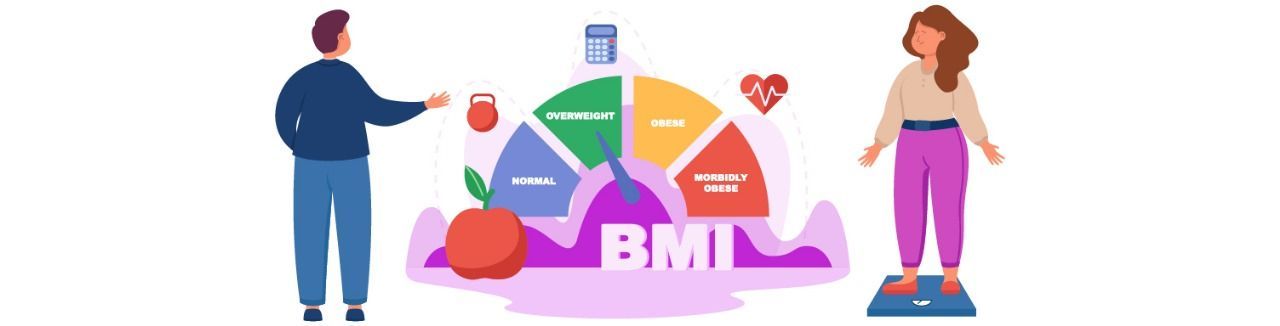
BMI (Body Mass Index) is a number calculated by dividing a person's weight in kilograms by the square of their height in meters (kg/m2). According to the World Health Organization (WHO), a BMI between 18.5 and 24.9 is considered healthy for most adults. A BMI of 25 to 29.9 is classified as overweight, and a BMI of 30 or above is classified as obese.
| BMI Range | Category | Associated Health Risk |
|---|---|---|
| Below 18.5 | Underweight | Moderate |
| 18.5 to 24.9 | Normal weight | Low |
| 25.0 to 29.9 | Overweight | Increased |
| 30.0 to 34.9 | Obese (Class I) | High |
| 35.0 to 39.9 | Obese (Class II) | Very high |
| 40.0 and above | Obese (Class III) | Extremely high |
The CDC links elevated BMI to type 2 diabetes, cardiovascular disease, hypertension, sleep apnoea, and several cancers. Studies show that losing just 5 to 10 percent of body weight reduces cardiovascular risk by up to 20 percent. Reducing BMI by even 2 to 3 points meaningfully lowers these risks.
Use DigiCalc's free BMI calculator to find your current BMI before starting, then set a target and measure your progress monthly.
How to Lower BMI: 6 Evidence-Based Strategies
The best way to lower BMI is to combine several lifestyle changes rather than relying on one method. Whether your goal is to get a lower bmi, improve bmi, or lose bmi fast, the strategies below are clinically proven.
1. Create a Sustainable Calorie Deficit
A calorie deficit is the foundation of BMI reduction. When you consume fewer calories than your body burns, it draws on stored fat for energy, reducing body weight and BMI over time. The NIDDK recommends a deficit of 500 to 1,000 calories per day. At this rate, expect safe weight loss of 0.5 to 1 kg (1 to 2 lbs) per week.
Practical steps to create a calorie deficit:
- Track daily calorie intake for one week to establish your baseline using a food diary or mobile app
- Reduce portion sizes by 20 to 25 percent rather than eliminating entire food groups
- Replace calorie-dense foods (fried items, pastries, sugary drinks) with lower-calorie alternatives such as vegetables, lean proteins, legumes, and water
- Eat slowly, chewing each bite thoroughly. Research shows this reduces total calorie intake by 15 to 20 percent without conscious restriction
- Plan meals in advance to avoid impulsive high-calorie choices when hungry
2. Add Resistance Training 2 to 3 Times Per Week
Strength training builds lean muscle, which raises your basal metabolic rate (BMR), meaning you burn more calories even while resting. Combining resistance training with calorie restriction removes far more body fat than dieting alone, per the Journal of Strength and Conditioning Research.
You do not need a gym. Bodyweight exercises including squats, push-ups, lunges, and planks performed 2 to 3 times per week for 30 to 45 minutes are effective. Use DigiCalc's BMR calculator to estimate how many calories your body burns at rest, so you can set a precise daily calorie target.
3. Increase Cardio Activity to 200 to 300 Minutes Per Week
The WHO recommends at least 150 to 300 minutes of moderate-intensity aerobic activity per week for adults. For active BMI reduction, aim for the upper end of that range. Brisk walking, cycling, swimming, and light jogging all count.
A 75 kg person burns approximately 300 to 400 calories in 45 minutes of brisk walking. Over a week, that amounts to 2,100 to 2,800 extra calories burned. That equals losing 0.3 to 0.4 kg (0.7 to 0.9 lbs) from cardio alone, with no diet change.
4. Prioritise Sleep Quality
Poor sleep increases ghrelin (the hunger hormone) and decreases leptin (the satiety hormone), causing greater calorie intake the next day without conscious effort. Research in the journal Sleep found that adults sleeping fewer than 6 hours nightly were more likely to have a higher BMI. The recommended range is 7 to 9 hours per night.
Steps to improve sleep quality:
- Maintain a consistent bedtime and wake time, including weekends
- Avoid screens for 60 minutes before bed (blue light suppresses melatonin)
- Keep the bedroom between 16 and 19 degrees Celsius (61 to 67 Fahrenheit)
- Avoid caffeine after 2 PM, as its half-life is 5 to 6 hours
5. Manage Chronic Stress
Chronic stress elevates cortisol, a hormone that promotes fat storage around the abdomen and increases cravings for high-calorie foods. The National Institutes of Health (NIH) recognises stress management as a key component of sustained weight and BMI reduction.
Effective daily strategies include 10-minute guided meditation, regular physical exercise (which simultaneously lowers cortisol), limiting alcohol, and maintaining social connections. Even a 20-minute daily walk outdoors has been shown to reduce cortisol levels by up to 14 percent.
6. Eliminate Liquid Calories
Sugary drinks, alcohol, packaged fruit juices, and flavoured coffees are among the most overlooked sources of excess calories. A single 500 ml cola contains around 200 calories with no nutritional benefit and no satiety effect. Replacing three such drinks per day with water removes approximately 600 daily calories. That equates to roughly 0.6 kg (1.3 lbs) lost per week from this change alone.
How to Lower BMI Fast and Quickly: Realistic Timeline
Those wanting to know how to lower bmi quickly, or how to reduce bmi quickly, often underestimate the time that safe, effective reduction takes. The fastest way to lower BMI combines a 500 to 750 calorie daily deficit with 200 to 250 minutes of exercise per week. How to lower bmi in a week is possible but modest. Here is what to realistically expect at a consistent pace:
| Timeframe | BMI Reduction | Approximate Weight Loss |
|---|---|---|
| 1 week | 0.1 to 0.2 points | 0.5 to 1 kg (1 to 2 lbs) |
| 1 month | 0.5 to 1.0 points | 2 to 4 kg (4 to 9 lbs) |
| 3 months | 1.5 to 3.0 points | 6 to 12 kg (13 to 26 lbs) |
| 6 months | 3.0 to 5.0 points | 12 to 20 kg (26 to 44 lbs) |
To reduce BMI quickly without risking muscle loss, stay within the 500 to 750 calorie deficit range. Very low calorie diets below 800 calories per day produce faster results short-term. But they cause muscle loss, nutritional deficiencies, and high rates of weight regain. The moderate, consistent approach above produces more durable BMI reduction with far lower risk.
How to Lower BMI as a Female
Understanding how to lower BMI female-specific challenges is essential for effective results. Women face specific physiological differences when trying to lower BMI. Hormonal fluctuations across the menstrual cycle, pregnancy, and menopause affect metabolic rate, water retention, and fat distribution. Oestrogen promotes fat storage in the hips and thighs. This is biologically protective but makes BMI reduction slower in women than men on average.
Key considerations for females:
- Calorie needs are lower: An average adult woman needs approximately 1,600 to 2,000 calories per day for weight maintenance. A 500-calorie deficit brings daily intake to 1,100 to 1,500 calories. Do not drop below 1,200 calories per day without medical supervision, as this risks nutrient deficiencies.
- Strength training is essential: Women naturally have less muscle mass than men. Adding resistance training 2 to 3 times per week increases resting metabolic rate, accelerating BMI reduction even on rest days.
- Hormonal timing: Many women exercise best during the follicular phase (days 1 to 14 of the cycle). Energy levels and insulin sensitivity are naturally higher during this window.
- Post-menopause adjustments: Declining oestrogen after menopause shifts fat storage toward the abdomen. Strength training and reducing refined carbohydrates are particularly effective at this stage and can counteract the typical post-menopause BMI increase of 1 to 2 points.
Women over 40 beginning an intensive weight-loss programme should consult a healthcare provider. Calorie needs and nutritional requirements shift meaningfully with age and hormonal status.
How to Lower BMI as a Male
How to lower BMI male-specific strategies differs from female approaches due to key physiological advantages. Men typically have a higher resting metabolic rate due to greater muscle mass, which means they can create a larger calorie deficit more easily. Testosterone promotes muscle retention during calorie restriction, preserving metabolic rate through the weight loss process. However, men are also more prone to visceral fat accumulation around the abdomen, which increases cardiovascular risk even at moderate BMI values.
Key considerations for males:
- Higher calorie baseline: An average adult man requires approximately 2,000 to 2,500 calories per day. A 500 to 750 calorie daily deficit still leaves adequate fuel for training and daily activity.
- Protein intake is critical: Men lose muscle faster on low-protein diets during calorie restriction. The NIH recommends 1.6 to 2.2 grams of protein per kilogram of body weight per day during a calorie deficit. This preserves muscle and supports metabolic rate.
- Visceral fat responds quickly to exercise: Abdominal fat in men is metabolically active. It responds to a calorie deficit faster than subcutaneous fat found elsewhere on the body.
- Alcohol is a major hidden factor: Men on average consume significantly more alcohol than women. Alcohol provides 7 calories per gram with no satiety effect. Eliminating or sharply reducing alcohol intake can create a 500 to 700 calorie daily deficit on its own.
How to Reduce BMI from 30 to 25
Dropping from a BMI of 30 to 25 moves a person from the obese range to the top of the normal weight range. The exact weight loss required to reduce BMI from 30 to 25 depends on height:
| Height | Weight at BMI 30 | Weight at BMI 25 | Weight Loss Needed |
|---|---|---|---|
| 160 cm (5 ft 3 in) | 76.8 kg (169 lbs) | 64.0 kg (141 lbs) | 12.8 kg (28 lbs) |
| 165 cm (5 ft 5 in) | 81.7 kg (180 lbs) | 68.1 kg (150 lbs) | 13.6 kg (30 lbs) |
| 170 cm (5 ft 7 in) | 86.7 kg (191 lbs) | 72.3 kg (159 lbs) | 14.4 kg (32 lbs) |
| 175 cm (5 ft 9 in) | 91.9 kg (203 lbs) | 76.6 kg (169 lbs) | 15.3 kg (34 lbs) |
| 180 cm (5 ft 11 in) | 97.2 kg (214 lbs) | 81.0 kg (179 lbs) | 16.2 kg (36 lbs) |
At 0.5 to 1 kg lost per week, reaching a BMI of 25 from 30 takes 13 to 32 weeks (3 to 8 months). Setting an intermediate goal of BMI 28 first, then targeting 25, helps maintain motivation. Use DigiCalc's BMI calculator to check your current number and track each milestone as you progress.
Limitations of BMI as a Health Metric
BMI is a useful screening tool, but it has several documented limitations that are important to understand before setting goals based solely on this number:
- Does not distinguish fat from muscle: A muscular athlete with low body fat may have a BMI classified as overweight. A sedentary person of the same BMI may carry significantly more fat and face higher health risks.
- Does not measure fat distribution: Waist circumference is often a better predictor of cardiovascular risk than BMI. Visceral fat stored around internal organs poses far greater health risk than subcutaneous fat stored under the skin.
- Age and sex differences: Older adults tend to carry more fat at the same BMI as younger adults due to natural muscle loss with age. Women have higher body fat percentages than men at equivalent BMI values.
- Ethnic variation: Research cited by the WHO indicates that some Asian populations face elevated health risks at BMI thresholds lower than the standard categories suggest.
For a fuller picture of health, combine BMI tracking with waist circumference measurement and regular blood pressure checks. Use DigiCalc's ideal weight calculator to see your healthy weight range alongside your BMI result. Use the calorie calculator to set a precise daily calorie target.